When we bought Free Run Cellars, we knew what we were signing up for. A tasting room. A winery license. About three acres of Pinot Gris. A house on the property that would become our primary residence. What we did not anticipate was becoming the stewards of a functioning wetland ecosystem with its own cast of characters and — apparently — a plot.
The pond is called Arrow Pond. It's man-made, shaped like an arrowhead, about a quarter acre. Spring-fed, which explains why the water runs clearer than you'd expect. When we walked the property before closing, it was pretty. Scenic. A nice feature. We didn't think much beyond that.
The Introduction
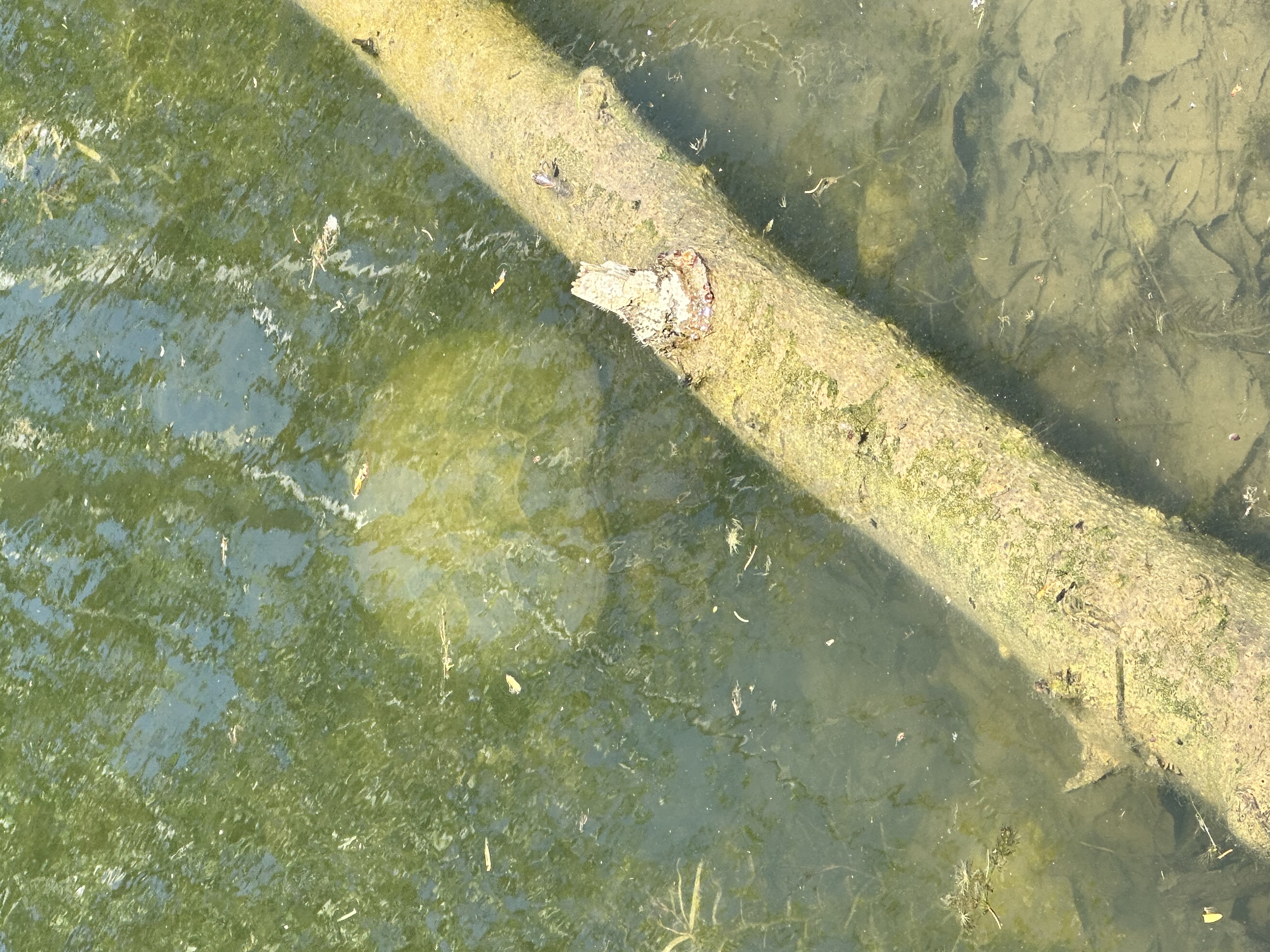
The turtles introduced themselves the way most things in nature do — through a disruption. A storm last May took the top off a tree and dropped it into the pond. We went out to assess the damage and found the pond very much occupied. Two snapping turtles, wrestling in the water with considerable commitment. Some observers have called it mating. I have no strong opinion on the matter. It looked like a disagreement to me, but I'm not a turtle. Apparently this tracks — male snapping turtles are known for aggressive territorial struggles. We rarely see them otherwise. They move through the water as a shape — a mass just under the surface, indistinct until it isn't. They have no interest in the log. They have no interest in us. The feeling is mutual.
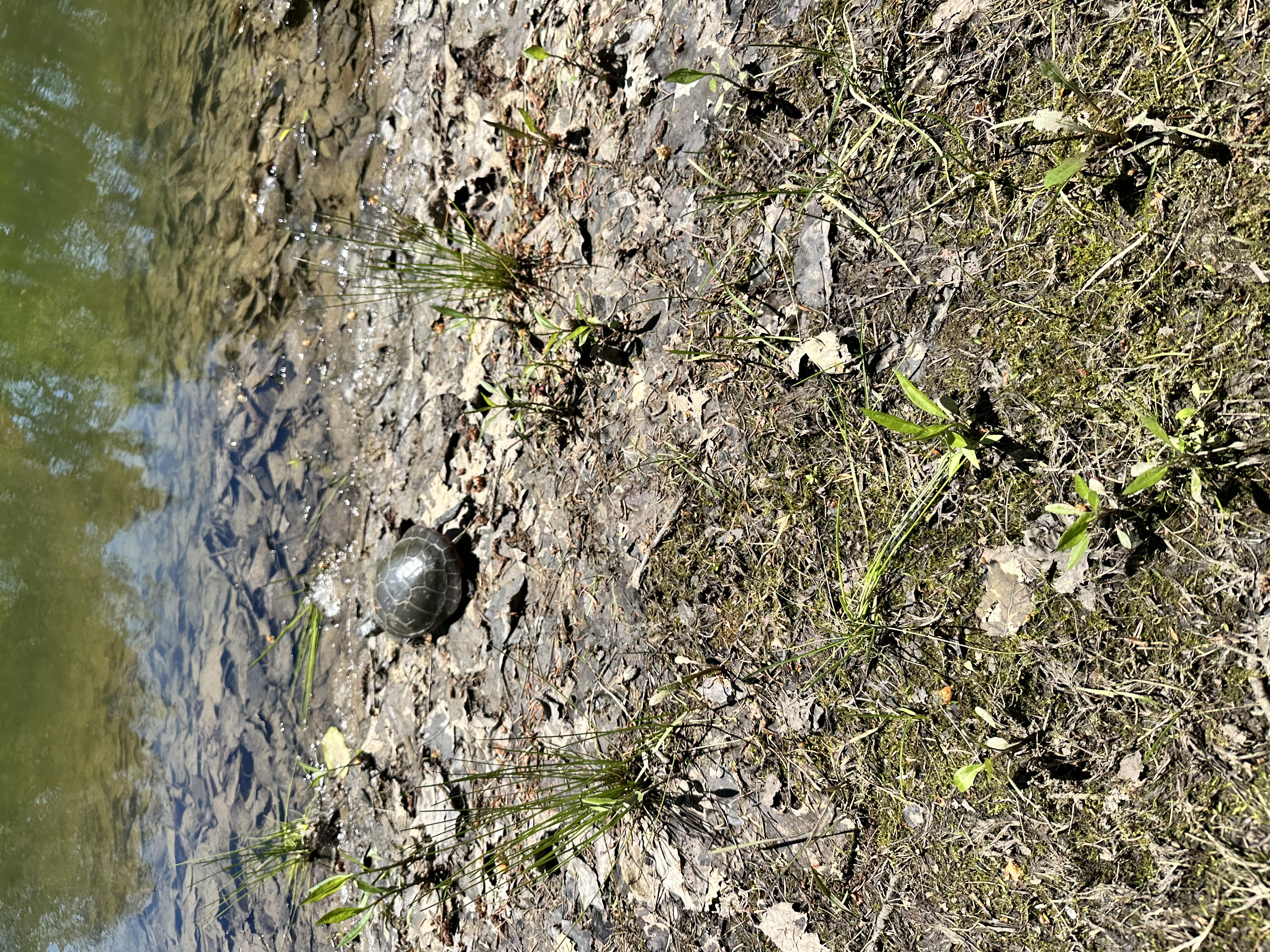
What we have in greater number are Midland Painted Turtles — Michigan's official state reptile, a designation lobbied for in 1995 by a group of fifth graders from Niles, which is about fifteen minutes from here. You'll see them on warm days stretched across the log that now lives permanently in the shallows — the same tree the storm knocked in. Apparently it makes excellent real estate. On a good afternoon there can be three or four of them lined up, completely unbothered by us. They've been here longer than we have. They act like it.
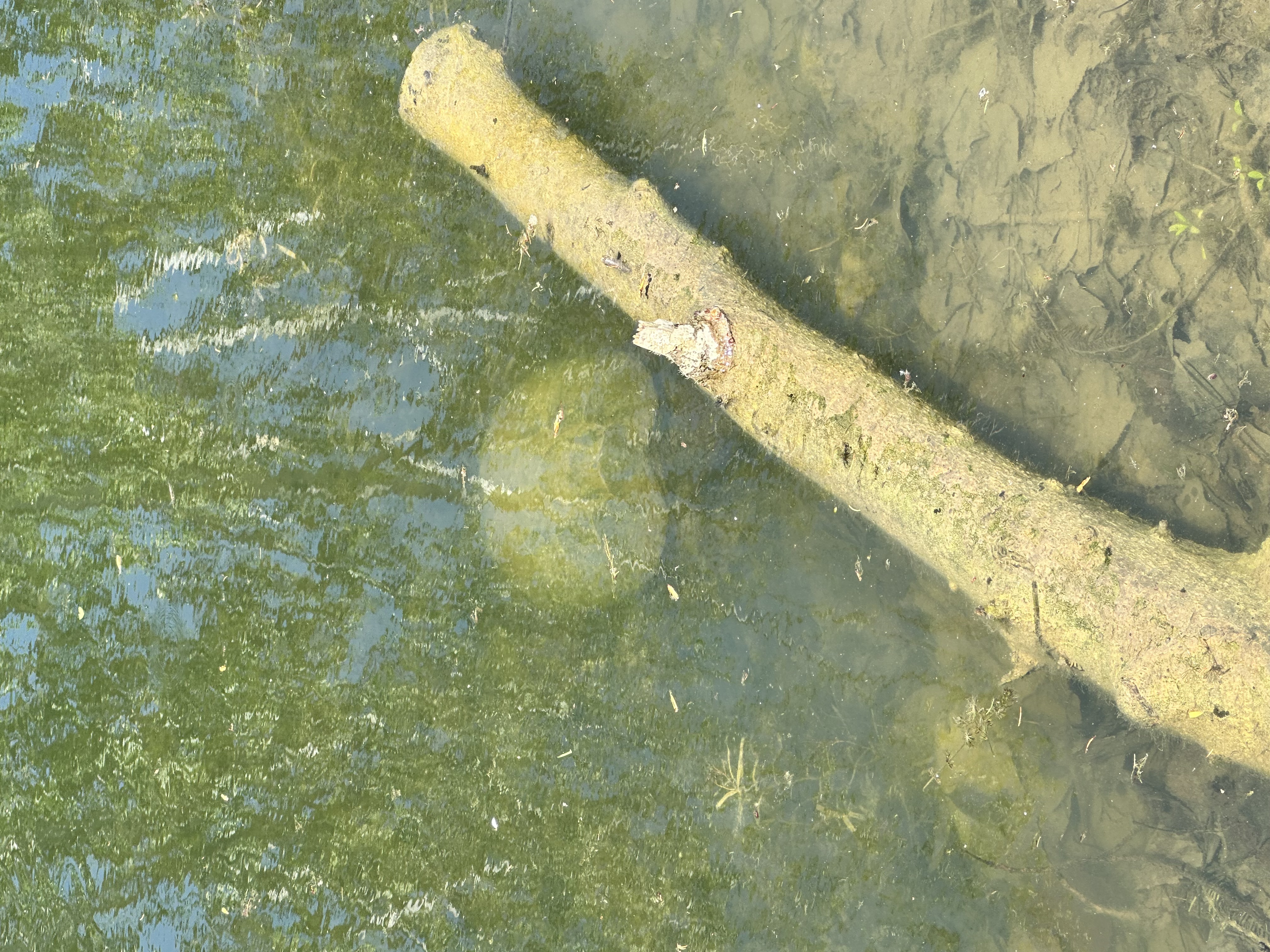
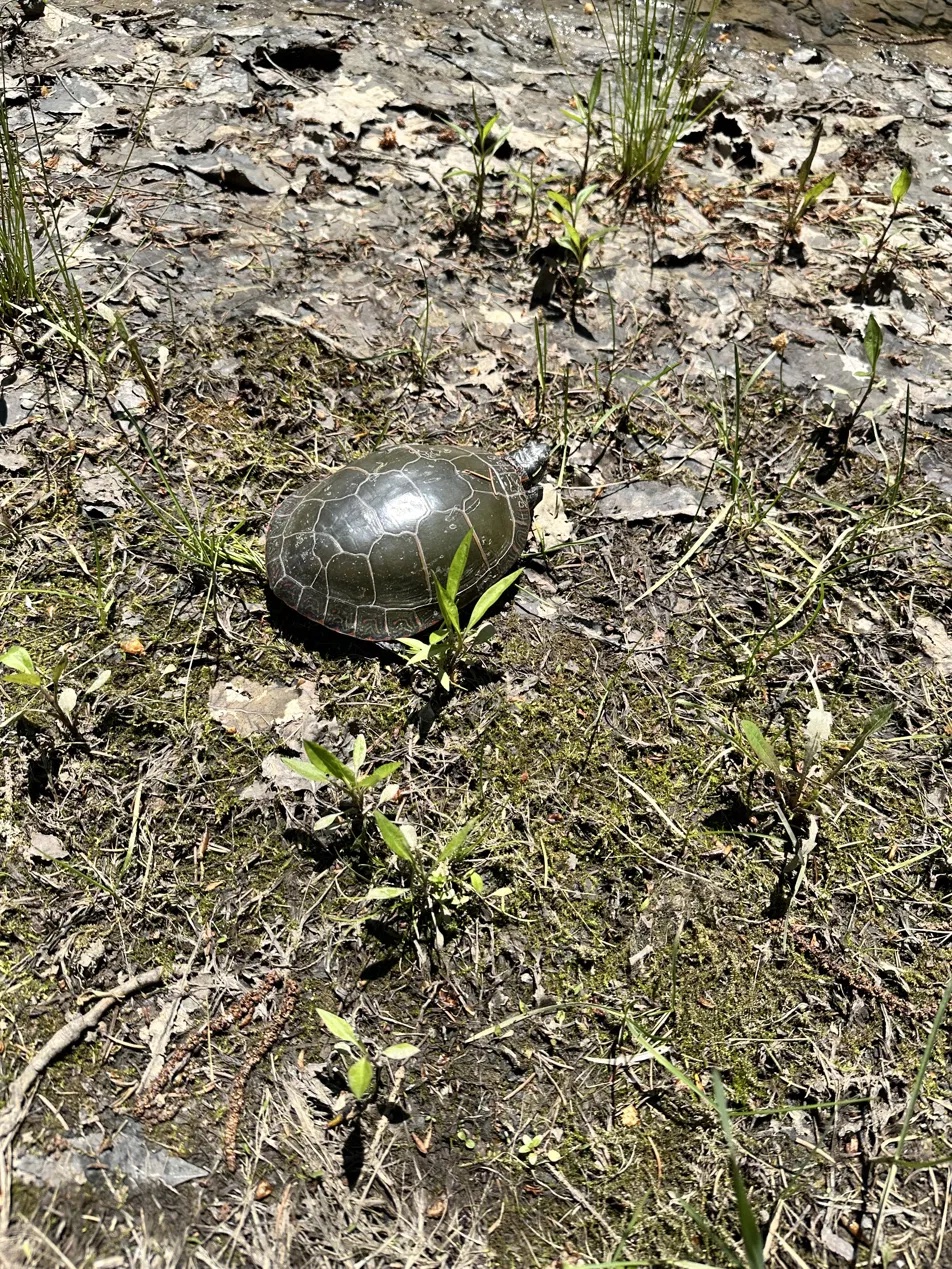
Left: the log that started it all. Right: one of our regulars taking in some sun.
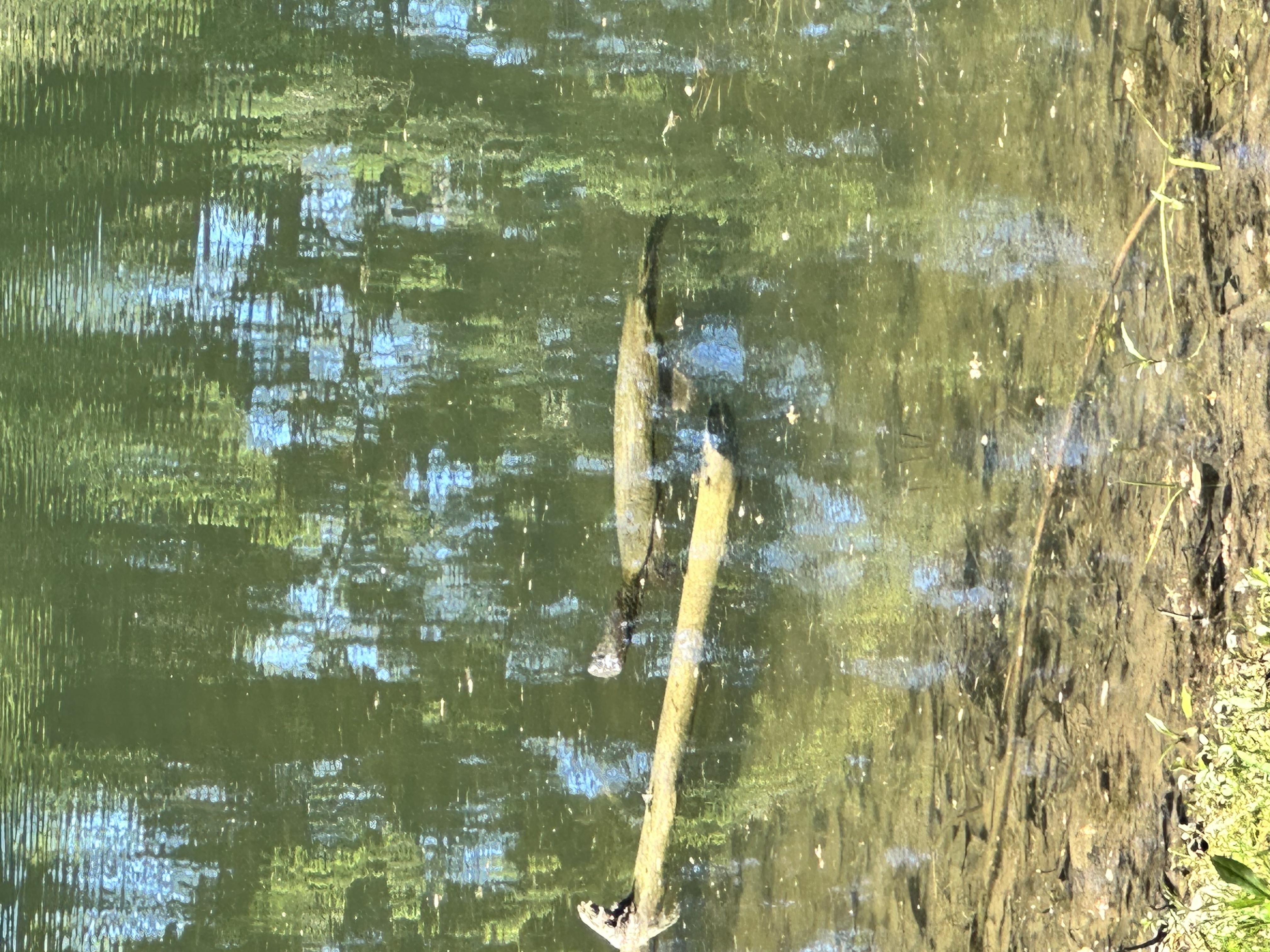
Somewhere in there.
The Regular
The Great Blue Heron visits often enough that I've decided it's the same bird. I can't prove that. I'm not an ornithologist and I don't have a band on its leg. But it shows up at the same spot on the pond edge, holds the same posture, and operates with the same complete indifference to my existence. I watch it from inside the house, through the window. I don't go out. It doesn't need an audience and going out would just end the show early.
The hunting technique is something. It stands absolutely still — not fidgeting, not adjusting, not checking anything — for what feels like an unreasonable amount of time. Then it strikes. The whole sequence from stillness to catch takes maybe a second. The waiting takes as long as it takes. I find this mildly humbling. I am not good at stillness. The heron has no opinion about this.
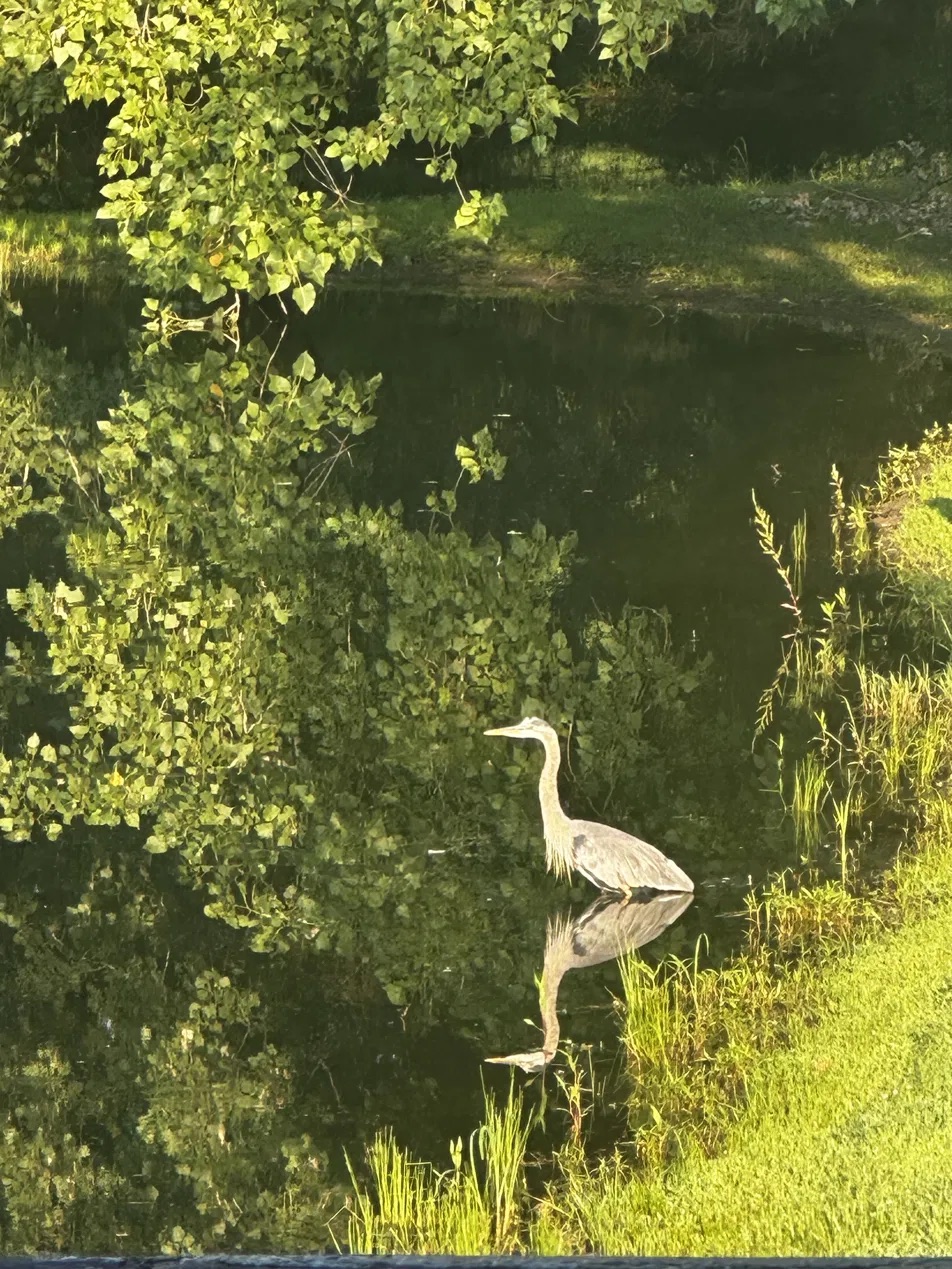
The regular. Arrow Pond, summer evening.
I looked up the lore on Great Blue Herons after it had been visiting for a while — the kind of thing you do when you're becoming a more holistic farmer than you expected and find yourself paying attention to birds. The Tlingit people of the Pacific Northwest believed the heron's presence indicated an abundance of fish and a successful harvest. The Iroquois trusted it as a good omen not just for fishing but for hunting. Several traditions describe it as a symbol of patience — the bird that waits as long as necessary while everyone else gives up. The Japanese believe it wards off bad luck.
I am an engineer. I build data pipelines for a living. I don't put a lot of stock in bird omens. And yet: the heron keeps showing up, the vines near the pond came through a difficult frost spring better than expected, and our first estate wine is almost ready. I'm not saying anything. I'm just noting the sequence of events.
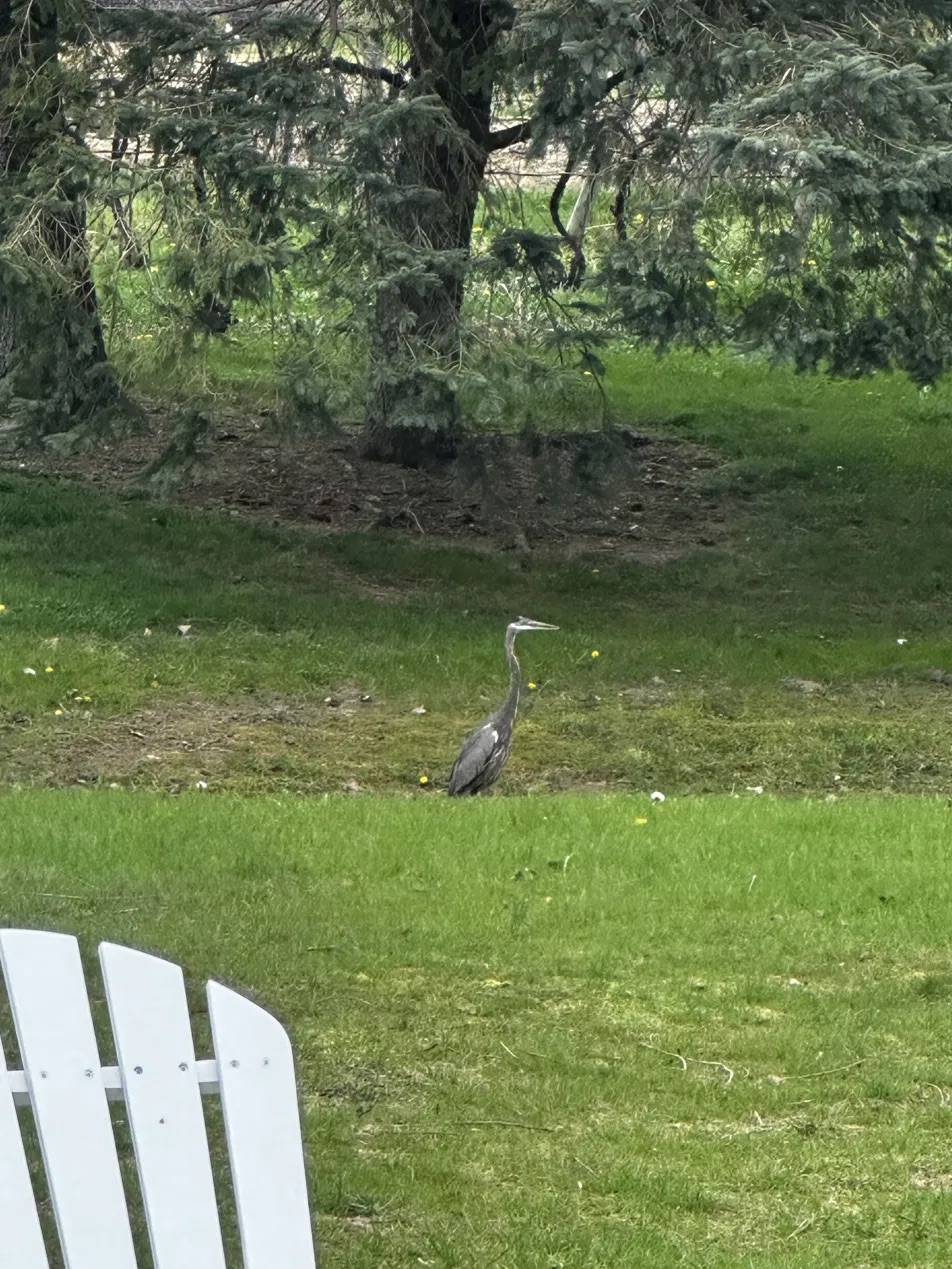
Watching from the Adirondack chair. It doesn't know we're there.
The One We Didn't Know About
Going back through old photos recently I found one from August 2025 — a smaller, darker bird on the log at the pond edge. Chestnut neck, greenish back, much more compact than the Great Blue. A Green Heron. A completely different species that had apparently been visiting Arrow Pond for at least a season before I was paying close enough attention to notice.
The Green Heron is, by most accounts, one of the more intelligent birds in North America. It's one of the few species documented using bait to fish — dropping insects or feathers onto the water surface to attract fish to the top. It has been running a more sophisticated operation at our pond than anything we've built here. We just didn't know it was happening.
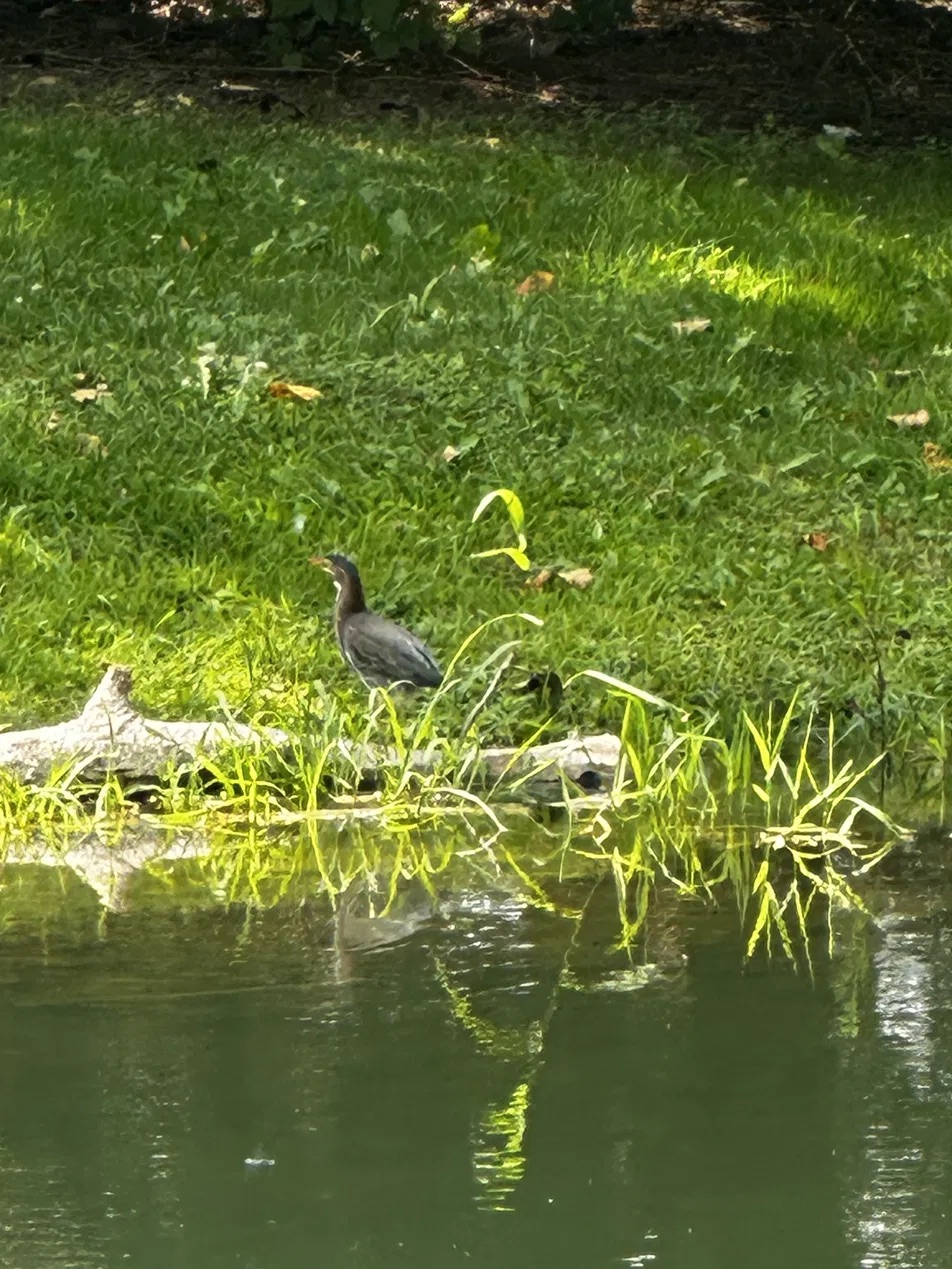
Green Heron, August 2025. Present before we were paying attention.
The Bullfrogs
The bullfrogs are loud. If you've visited on a summer evening you've heard them — that low, resonant call that starts at dusk and doesn't really stop. I don't have an accurate count. It's more than a few. They were here before we arrived and they will be here after we leave for the evening. They are the closing act every night and they don't need our permission to start.
Arrow Pond by the numbers
~0.25 acres · spring-fed · Midland Painted Turtles · snapping turtles (occasionally sighted) · Great Blue Heron (regular) · Green Heron (since at least August 2025) · bullfrogs (many) · fish (fewer than before the herons arrived)
The Fish
The pond has fish. Mostly what appear to be goldfish — some plain, some with koi-like markings, the yellowish-orange ones visible from the bank on a clear day. I say "appear to be" because I've never actually stocked them. They were here when we arrived. At this point I'm considering restocking, not out of any particular affection for the fish, but because the herons and the turtles are clearly eating well and someone has to keep the supply chain running.
Managing the Pond
The pond needs maintenance like anything else. There's sludge buildup on the bottom — organic matter accumulating over years. The obvious solution is dredging, which would be thorough and also completely disruptive to everything living in there. We looked into it and decided against it. Instead we're using beneficial pond bacteria — microbial cultures that break down the organic matter naturally, slowly, without disturbing the turtles or the herons or whatever else has made this pond home. It takes longer. It's less dramatic. It seems right.
Why I'm Writing About This
We talk a lot about what Free Run Cellars is as a winery. The estate grapes. The Ramato we're making. The Atithidevo Bhav hospitality philosophy. All of that is real and it matters. But there's also just — this. A pond that has been quietly running its own operation for years, unbothered by ownership transfers and brand strategies. The turtles don't know it's a winery. The heron doesn't care about the Pinot Gris.
I find that grounding. We are tenants of this land as much as owners of it. The ecosystem here was doing fine before us and will do fine after. Our job is mostly not to ruin it.
There's something else I've been thinking about. A few miles west of us, Lake Michigan does something measurable to this region's vineyards — moderates temperatures, delays frost, extends the growing season. It's why the Lake Michigan Shore AVA exists. The pond is obviously not Lake Michigan. But this spring, through a stretch of frost events that put a lot of growers on edge, I noticed that the vines closest to Arrow Pond seemed to come through with less damage than the ones on the outer edges of the block. I can't prove that. I don't have sensors or data. It could be coincidence, elevation, air drainage, any number of things. But I would like to believe the pond is doing something. A small body of water holding a little warmth overnight, releasing it slowly, quietly looking after the vines nearest to it. The turtles wouldn't know. The heron certainly doesn't care. But I'm paying attention.
If you visit, walk down to the pond. Especially on a warm afternoon. Bring a glass of something. The Midland Painted Turtles will be on the log. They won't acknowledge you. That's fine. You weren't expecting a conversation.
Arrow Pond in May 2026.